

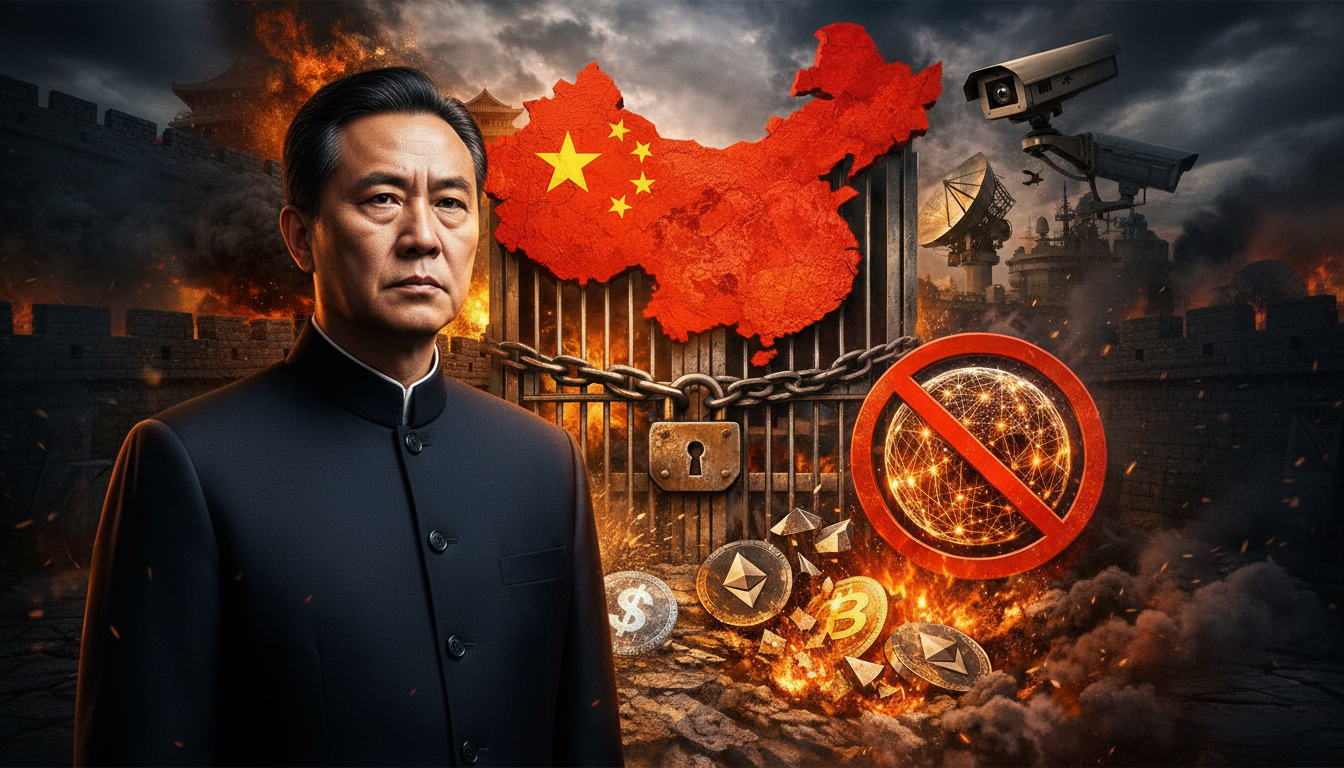
Chinese financial regulators have expanded their cryptocurrency restrictions in a comprehensive new directive that targets both domestic and international digital asset activities. The People’s Bank of China and seven other government agencies released updated guidance that specifically prohibits unauthorized yuan-backed stablecoins and introduces new oversight measures for offshore token issuance.
The regulatory update extends China’s existing virtual currency ban to cover previously unaddressed areas of the digital asset ecosystem. Companies with Chinese connections are now explicitly forbidden from issuing cryptocurrencies abroad without formal government approval, closing what some market participants had viewed as a regulatory gap.
Stablecoin Restrictions Take Center Stage
The new measures place particular emphasis on stablecoins pegged to the Chinese yuan, with authorities stating that such instruments cannot be issued by private entities outside China’s borders. This represents a direct challenge to any international platforms that might seek to create yuan-denominated digital assets for global trading.
Winston Ma, an adjunct professor at NYU School of Law, characterized the announcement as Beijing sending a clear message that private yuan-based stablecoins will not be tolerated on international cryptocurrency exchanges. The People’s Bank of China emphasized that only the digital yuan carries official backing as legitimate state-issued digital currency.
The regulatory framework acknowledges that stablecoins tied to fiat currencies can function similarly to money in circulation, making them a priority for government oversight. Officials noted that recent speculative activity in virtual currencies has created fresh risks that require additional regulatory intervention.
Real-World Asset Tokenization Gets Clarification
While tightening cryptocurrency restrictions, the new guidance appears to create a pathway for regulated real-world asset tokenization activities. Industry observers suggest the language used by regulators indicates a deliberate distinction between banned virtual currencies and potentially permissible asset tokenization under proper oversight.
Louis Wan, chief executive of Unified Labs, described this regulatory separation as a watershed moment for China’s approach to digital assets. According to Wan, the clear differentiation between prohibited cryptocurrencies and regulated real-world asset tokenization could represent the beginning of a structured framework for legitimate blockchain-based asset activities.
This development comes as institutional interest in tokenized real-world assets continues growing globally, with traditional financial institutions exploring blockchain applications for securities, commodities, and other tangible assets. The SEC’s corporate finance division in the United States has similarly been working to clarify regulatory boundaries around asset tokenization.
Offshore Operations Under New Scrutiny
The expanded regulations specifically target Chinese companies and their overseas subsidiaries that might attempt to circumvent domestic cryptocurrency restrictions through foreign operations. Regulators stated they will closely monitor offshore token issuance backed by assets located within China, effectively extending their jurisdictional reach beyond national borders.
This extraterritorial approach reflects growing global trends among financial regulators who are seeking to prevent regulatory arbitrage in digital asset markets. The European Union’s Markets in Crypto-Assets regulation and similar frameworks worldwide demonstrate increasing coordination on cross-border cryptocurrency oversight.
The joint statement from Chinese agencies reiterated that virtual currencies lack the legal status of traditional fiat money, reinforcing the fundamental policy position that has governed China’s approach to digital assets since 2017. Foreign entities were specifically warned against issuing yuan-pegged stablecoins without explicit authorization.
Market Implications and Global Context
The timing of these expanded restrictions comes as global cryptocurrency markets have shown renewed volatility and institutional adoption continues evolving. Total cryptocurrency market capitalization recently approached $2.4 trillion, according to data from major trading platforms, highlighting the scale of assets potentially affected by major regulatory decisions.
Financial institutions worldwide are closely watching China’s regulatory approach as they develop their own digital asset strategies. The country’s large economy and significant role in global supply chains mean that Chinese regulatory decisions often influence international market dynamics and investment flows.
Industry analysts note that the new guidance may push Chinese-connected entities to seek alternative jurisdictions for their digital asset activities, potentially benefiting regulatory frameworks in Singapore, Hong Kong, and other Asian financial centers that have developed more accommodating cryptocurrency policies.
The regulatory update also comes amid broader global discussions about central bank digital currencies and the role of private stablecoins in international finance. Major economies including the United States and European Union are grappling with similar questions about how to regulate private digital currencies while maintaining monetary policy control.
For institutional investors, the Chinese regulatory expansion represents another factor to consider when evaluating digital asset exposure and compliance requirements. Firms with Chinese operations or partnerships must now navigate an even more complex regulatory environment when structuring their cryptocurrency and blockchain investments.
